Smoke and soot residue
Dry soot, oily soot, and protein residues can stain paint, cabinets, tile grout, and porous materials. We match the cleaning method to the soot type to prevent smearing and permanent staining.
Serving Los Angeles, California & surrounding areas
Fast, careful cleanup for smoke, soot, and fire-damaged materials, with a clear scope so you can make decisions and move forward.
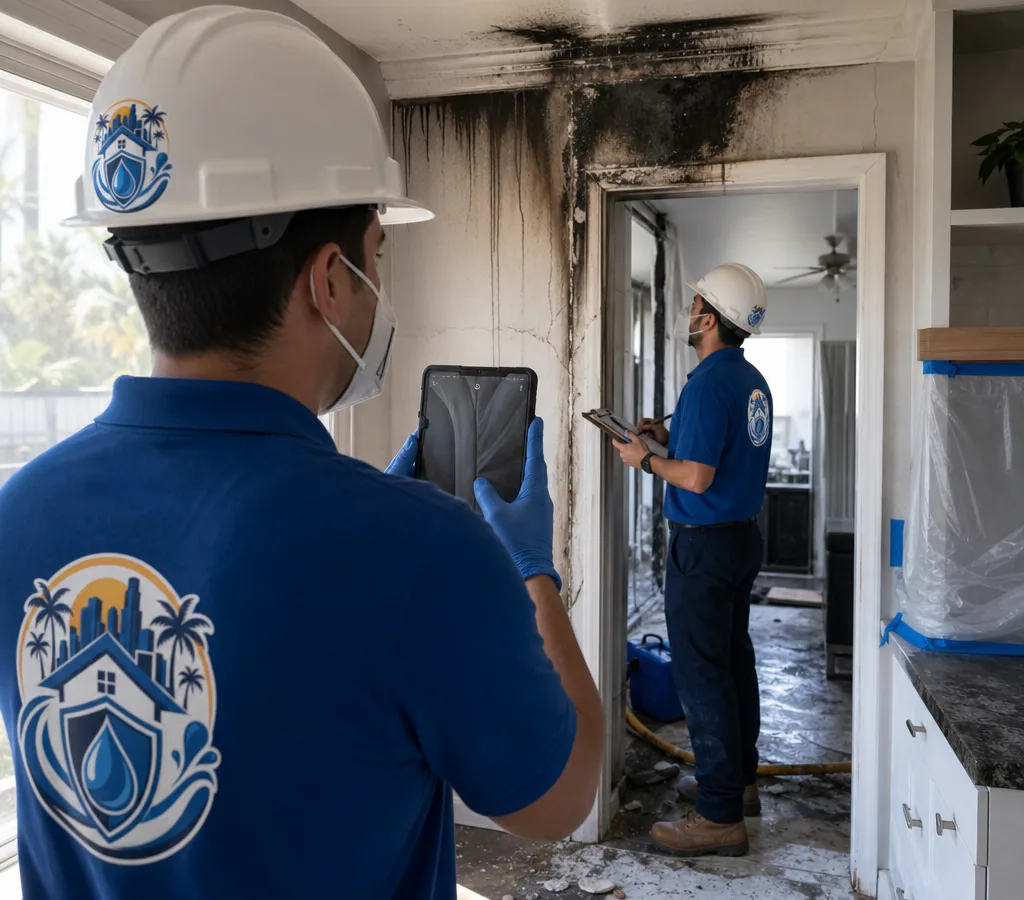
Fire damage restoration in Los Angeles usually means more than removing burned debris. Smoke and soot spread through a property fast, and acidic residues can keep damaging finishes, HVAC components, and electronics even after flames are out. The goal is to stabilize the structure, remove contamination, control odor, and rebuild what has to be replaced.
Our team at Water Damage Los Angeles CA approaches fire remediation as a step-by-step project: document conditions, isolate affected areas, remove unsalvageable materials, clean and deodorize remaining surfaces, and then plan repairs. If you are working with an insurance adjuster, we can provide a written scope and supporting photos so the claim can move without confusion.
In Los Angeles, condos and multi-unit buildings add another layer: shared hallways, neighbors, and building rules. Containment, negative air, and clear scheduling matter so the cleanup does not create additional issues for other units.
We assess visible damage, hidden smoke paths, structural concerns, and the documentation needed to organize cleanup and repairs.
Dry soot, oily soot, and protein residues can stain paint, cabinets, tile grout, and porous materials. We match the cleaning method to the soot type to prevent smearing and permanent staining.
Smoke odor can sit in drywall paper, insulation, framing, and soft goods. We use a combination of source removal, HEPA filtration, and targeted deodorization based on where the odor is trapped.
Charred drywall, insulation, baseboards, flooring, and contents that cannot be cleaned must be removed safely, bagged, and disposed of so the property can be restored properly.
Heat can weaken framing, crack plaster, and compromise fasteners. We identify what needs temporary bracing, what is cosmetic, and what requires a contractor-level repair plan.
We set up containment with critical barriers and run air scrubbers with HEPA filtration to reduce airborne soot and cross-contamination during demolition and cleaning.
Photos, moisture and odor observations, and an itemized scope help keep repairs organized, whether you are paying directly or coordinating with insurance.
In dense areas like Koreatown and Downtown Los Angeles, fire remediation often happens in buildings where other units are still occupied. The work has to be controlled so soot does not migrate into corridors, elevators, or neighboring apartments.
We typically start by isolating the affected areas with plastic barriers and zipper doors, then create directional airflow so contaminants move into filtration, not into clean spaces. Air scrubbers with HEPA filters help capture fine particles while demolition and cleaning are underway. If your HVAC system ran during the incident, we will flag the return paths and registers that may need cleaning or sealing during remediation.
For single-family homes, the concerns shift to spread across open floor plans, attics, and garages. In areas with older housing stock, such as parts of Echo Park and Highland Park, we pay close attention to porous plaster, aged wood, and crawlspaces where odor can linger unless the source is removed.
If the fire event involved water from suppression, it may be smart to coordinate fire cleanup with water damage restoration in Los Angeles so drying and contamination control happen in the right order and materials are not cleaned only to be removed later.
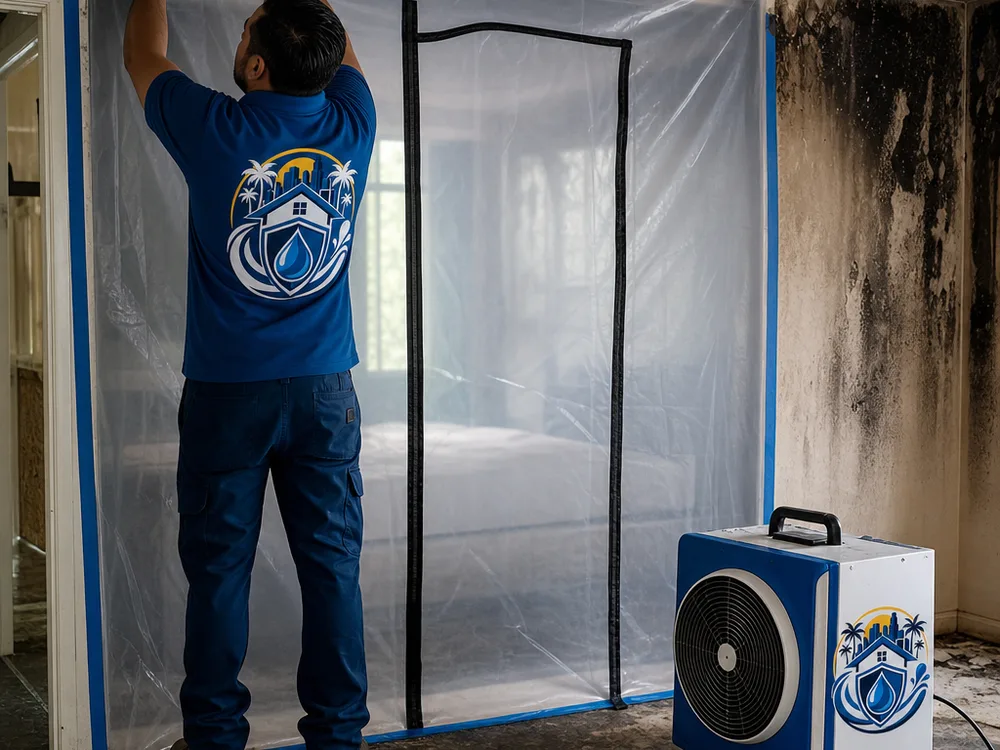
A controlled sequence keeps soot from spreading, removes damaged materials, addresses embedded odor, and prepares the property for an organized rebuild.
We assess the affected rooms, the likely smoke paths, and any safety concerns. Photos and notes establish a baseline for the scope, including what is cleanable versus what must be removed.
We isolate impacted areas to reduce soot spread. When conditions require it, we run negative air and HEPA filtration to support indoor air quality during remediation.
Charred and contaminated materials are removed first. This typically includes drywall, insulation, flooring layers, cabinets, and trim that cannot be cleaned back to an acceptable condition.
We use dry sponging, HEPA vacuuming, and wet cleaning methods chosen for the residue type and surface. The goal is to remove the residue, not push it deeper into porous materials.
Odor work follows source removal. Depending on the loss, this can include hydroxyl or ozone treatment when appropriate, thermal fogging, and sealants in areas where odor is embedded.
After remediation, we provide a clear restoration plan for repairs such as drywall, paint, flooring, cabinetry, and finish carpentry. You get a practical sequence so the rebuild does not stall.
Fire damage restoration in Los Angeles typically ranges from about $3,000 to $12,000 for a small to moderate loss, while larger fires with heavy soot, demolition, and rebuild coordination often run $15,000 to $50,000+ depending on what has to be removed and replaced.
Price changes most with the number of rooms affected by smoke, the type of soot (dry vs oily), how much drywall and insulation must be demolished, HVAC involvement, and whether contents cleaning is included. The exact cost is confirmed after an on-site inspection and a written scope.
“After a kitchen fire, the smoke smell was everywhere and the walls were streaked with soot. They explained what could be cleaned, what had to come out, and kept the work area sealed so the rest of the condo stayed livable.”
“We needed documentation for insurance and a real plan, not vague promises. The photos and itemized scope helped, and the odor treatment made a noticeable difference once the damaged materials were removed.”
Cleanup should start as soon as the property is safe to enter and you have clearance from the fire response, because soot residue can keep etching and staining surfaces over the next several days. In Los Angeles, delays are common when units share walls and access has to be coordinated with property management, so getting an inspection scheduled quickly helps prevent secondary damage.
Sometimes, but only if the odor source is light and residues have not penetrated porous materials. If soot and odor have absorbed into insulation, drywall paper, or unfinished wood, removing and replacing those materials is often the only reliable way to stop the smell from returning, especially when warm weather heats up enclosed spaces.
Yes, multi-unit buildings usually require stricter containment, quieter work hours, and careful control of debris movement through common areas. We plan for negative air and HEPA filtration when needed, and we coordinate access so smoke-damaged materials can be removed without spreading soot into hallways or neighboring units.
Hard, non-porous items like many metals, glass, and some finished plastics can often be cleaned, while porous items like mattresses, low-density foam, and heavily smoke-impacted textiles are harder to restore. Electronics may be salvageable, but soot can be corrosive, so they should be evaluated and cleaned appropriately rather than simply wiped down.
Yes, we can provide photos and an itemized scope of work so the adjuster can review what is required for proper fire damage restoration. Los Angeles claims often move faster when the scope clearly separates remediation steps (cleanup and odor control) from rebuild items (drywall, paint, flooring).
Water from suppression needs to be dried and managed quickly to avoid swelling materials and microbial growth, and it should be sequenced correctly with smoke cleanup. If needed, we coordinate drying and cleanup as one plan so materials are not treated twice and the restoration stays organized.
Tell us what happened and what areas were affected. We will schedule an inspection in Los Angeles, document the damage, and provide a written scope for fire remediation so you can move forward with repairs.
Call us anytime — we are open for requests 24/7 across the Los Angeles service area.