
Hidden growth after water damage
If a past leak was painted over or dried too slowly, mold can develop behind drywall, under flooring, or inside closets. We use moisture mapping to define the real boundaries so the project does not expand midstream.
Serving Los Angeles, California & surrounding areas
If you smell a musty odor, see staining, or have had a leak, the next step is a proper inspection and a written remediation plan. Our local team contains the affected area, removes mold safely, and helps prevent it from coming back.
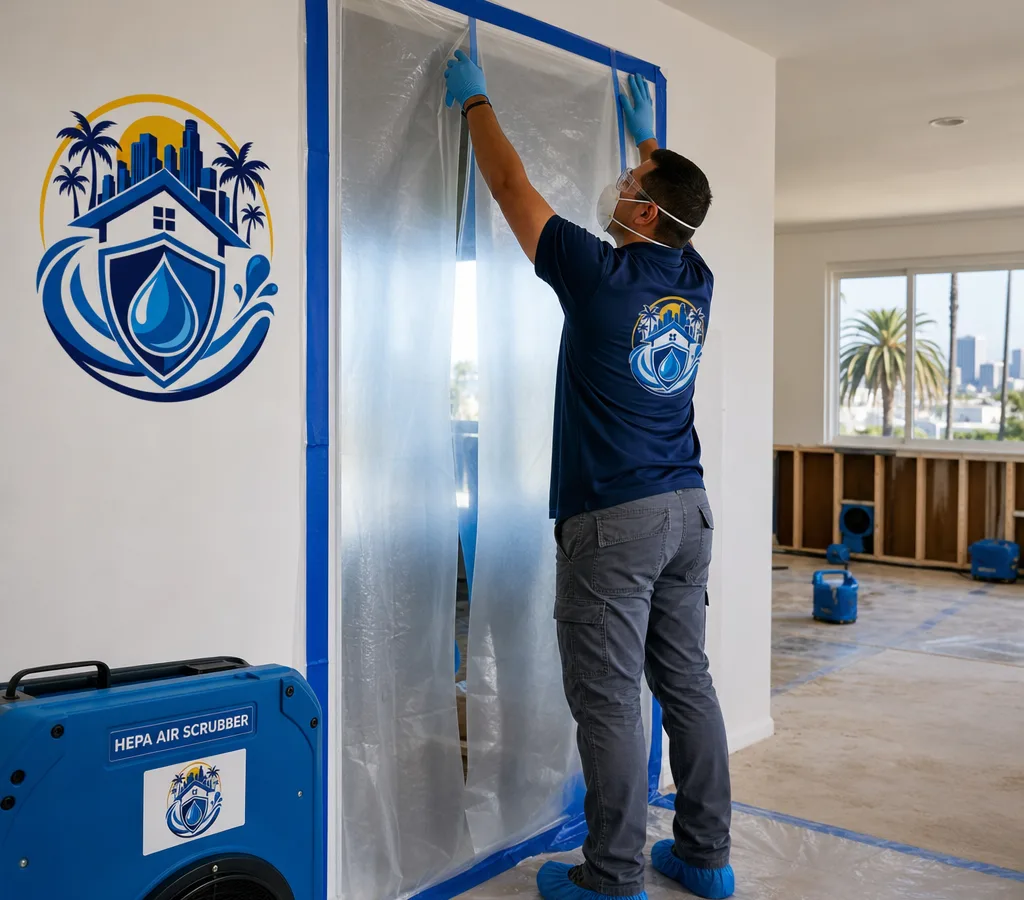
Hiring a mold removal company in Los Angeles should start with answers, not guesses. Mold is usually a moisture problem first, and the remediation plan should be based on what is wet, what is contaminated, and how air is moving through the space.
Water Damage Los Angeles CA handles mold remediation Los Angeles homeowners and property managers need when indoor growth shows up after leaks, plumbing issues, roof problems, or lingering humidity. We focus on containment, source control, safe removal of impacted materials, and detailed cleaning so the work holds up after the equipment is gone.
Los Angeles buildings vary a lot. Older plaster walls, raised foundations, and additions done over decades can hide moisture pathways. Condos and multifamily buildings add shared walls and ventilation interactions that make containment and negative pressure even more important. We walk you through what we find, what has to be removed versus cleaned, and what needs to dry out so mold does not return.
Growth often follows persistent humidity, hidden plumbing leaks, condensation, or wet materials that never fully dried.
If a past leak was painted over or dried too slowly, mold can develop behind drywall, under flooring, or inside closets. We use moisture mapping to define the real boundaries so the project does not expand midstream.
Steamy showers, weak exhaust fans, and frequent laundry cycles can leave moisture in drywall corners, behind baseboards, and around vanities. We inspect adjoining cavities and focus on cleaning plus moisture control.
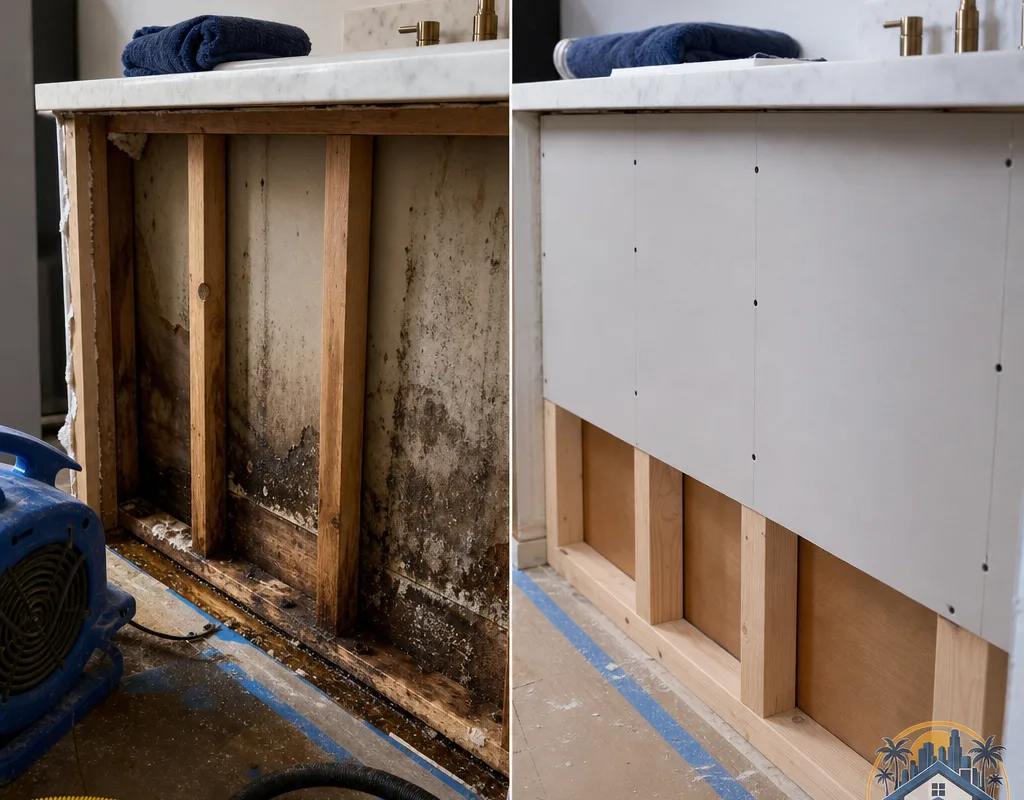
Slow drips under kitchen and bathroom sinks often soak cabinet bottoms and the wall behind them. The right scope usually includes removing the swollen materials, HEPA cleaning, and drying the cavity before rebuild.
Condensate line backups and poorly drained drip pans can wet framing and insulation. Remediation often includes targeted removal and cleaning around the air handler area and verifying the moisture is actually gone.
Raised foundations are common in parts of Los Angeles, and wet soil, plumbing leaks, or poor ventilation can lead to mold on joists and subflooring. Containment, HEPA work practices, and drying are key.
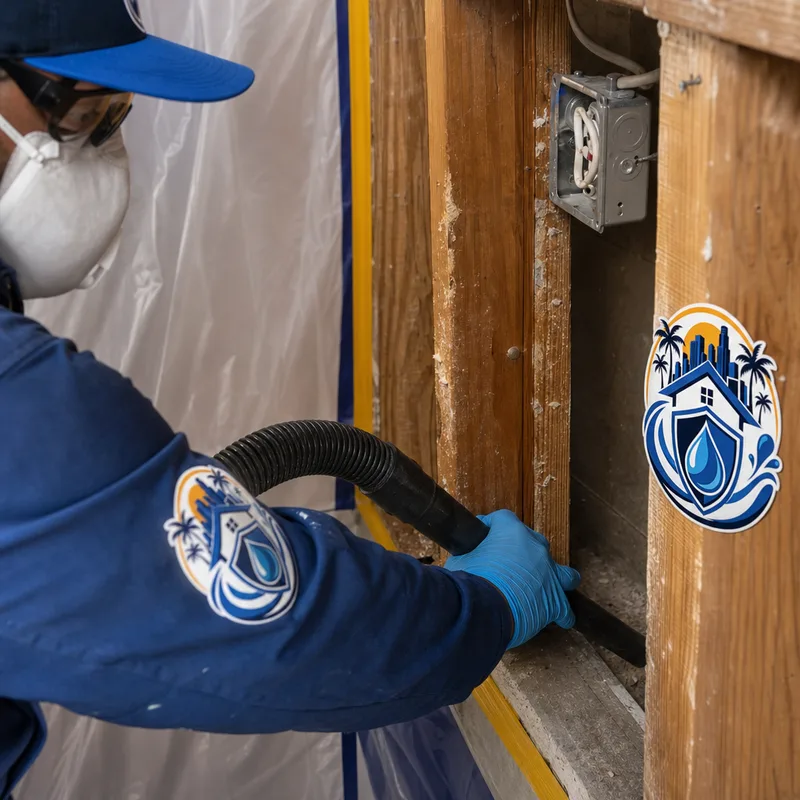
Good mold work looks boring on purpose. The goal is to keep spores and dust from spreading while contaminated materials are removed and the remaining surfaces are cleaned.
Our mold remediation process typically includes:
If the mold started after a leak or flooding, many clients begin with water damage restoration in Los Angeles to address wet materials quickly, then transition into remediation once the affected areas are opened and evaluated.
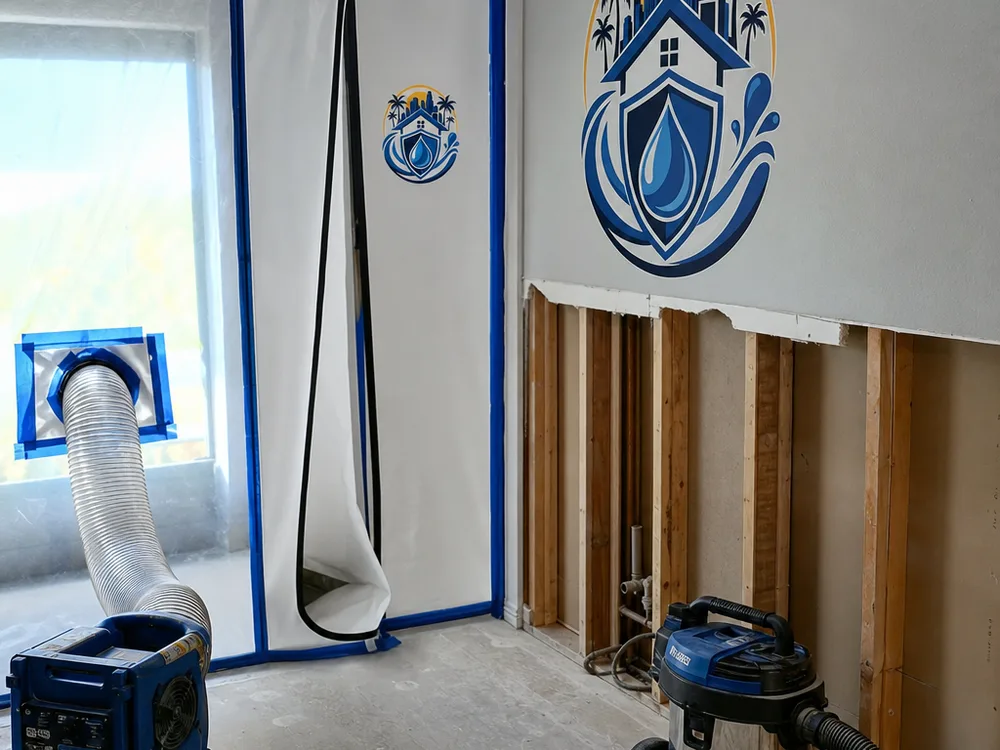
A clear sequence protects occupied areas, controls airborne debris, and keeps removal, cleaning, drying, and repair planning organized.
We start by hearing what you have noticed—odor, staining, allergy symptoms, or a recent leak—and identifying where moisture may be coming from. For occupied properties, we also plan for access and containment.
You receive a clear scope covering what gets removed, cleaned, and dried, which equipment is used, and what must happen before rebuild. If independent testing is involved, we coordinate the work around those results.
We isolate the work zone with poly barriers and set up HEPA filtration. This prevents a dusty demolition from spreading contamination into closets, ducts, and adjacent rooms.
We remove unsalvageable porous materials and clean remaining surfaces using HEPA methods. We also address settled dust inside the contained area so residue is not left behind after repairs.
We confirm the area is dry and review repair needs such as drywall, trim, paint, and flooring. We document what must be corrected before the cavity is closed so the moisture problem is not repeated.
Mold removal in Los Angeles typically ranges from about $900 to $3,500 for a small to medium, contained area, while larger projects that involve multiple rooms, extensive demolition, or heavy contamination can run $5,000 to $15,000+.
Your final price depends on the size of the affected area, how far mold has spread into wall or ceiling cavities, the amount of material removal required, access such as tight bathrooms or crawl spaces, and how much drying and containment is needed. The exact cost is confirmed after an on-site inspection and written scope.
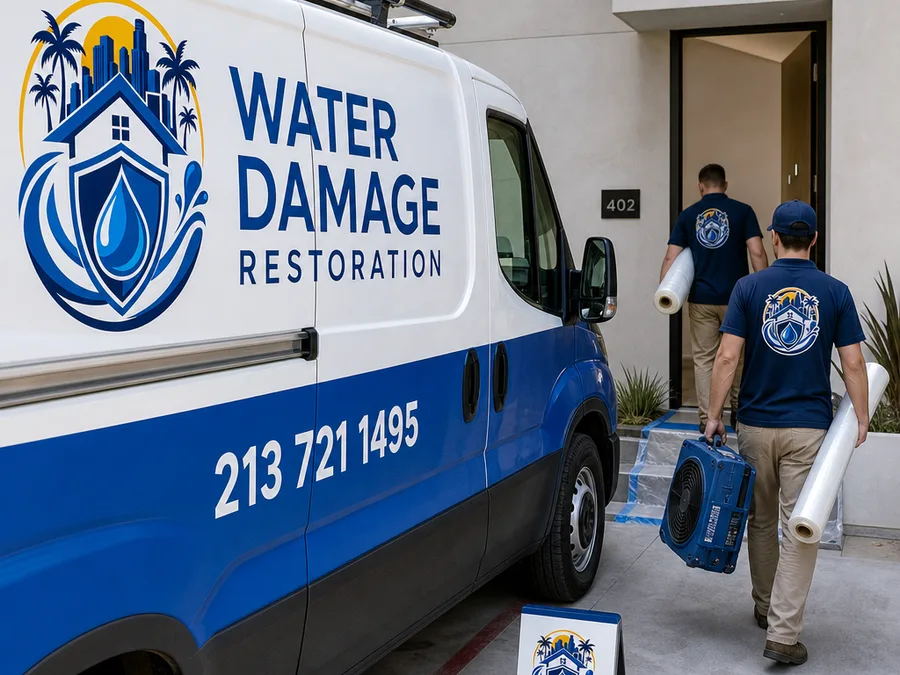
Most jobs begin after a quick inspection and a written scope, and start time depends on access, occupancy, and how urgent containment is. If there is active moisture or ongoing damage, the priority is to isolate the area and stop the source so the problem does not expand while scheduling is finalized.
Drywall is removed when it is water-damaged, softened, or contaminated on the back side where it cannot be cleaned reliably. If growth is only on a non-porous surface and the substrate is dry and intact, remediation may be handled with cleaning and targeted removal instead of full wall demolition.
Often, yes, when the affected area can be fully contained and isolated from bedrooms and main living areas. If the contamination is widespread, the HVAC system is involved, or the work area includes critical spaces like the only bathroom, we will explain practical options to reduce exposure and disruption.
Mold cleanup is usually surface-level cleaning, while mold remediation addresses the contaminated materials, controls airflow with containment and negative pressure, and includes drying and moisture correction steps. If moisture is not corrected, even a very thorough cleaning can fail over time.
Yes. Multifamily remediation typically requires tighter containment and scheduling around tenants, shared walls, and building rules for debris removal and work hours. We provide a clear scope so owners and managers can coordinate repairs and access without confusion.
Testing can be useful when you need documentation or when the source and extent are unclear, but many mold problems are confirmed visually and with moisture findings during inspection. If you already have lab results, we can build the remediation scope around the report and focus on removing contaminated materials and fixing the moisture driver.
Tell us what you are seeing or smelling and where the problem started. We will inspect the area, map moisture, and provide a written remediation plan so you can move forward with clear expectations.
Call us anytime — we are open for requests 24/7 across the Los Angeles service area.